Table of Content
1. INTRODUCTION
1.1. General
The Polar Code, encompassing both safety and environmental provisions, is mandatory under the SOLAS and MARPOL conventions.
- Part I (Safety Measures) of the Polar Code applies to SOLAS-certified ships operating in Polar waters.
- Part II (Pollution Prevention Measures) applies to ships operating in Polar waters as specified in each relevant Annex of MARPOL.
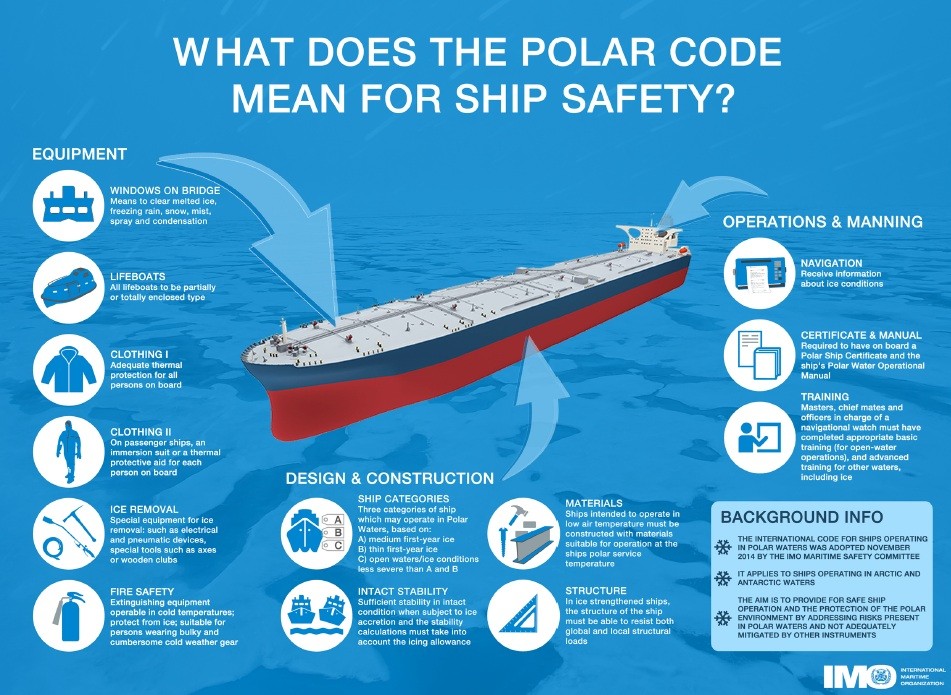
The Polar Code addresses a comprehensive range of factors relevant to ships operating in polar environments, including design, construction, equipment, operations, training, and environmental protection.
It includes mandatory safety measures Part (I-A), mandatory pollution prevention measures (Part II-A), and recommendatory provisions for both safety (Part I-B) and pollution prevention (Part II-B).
The Polar Code also introduces additional training requirements for crew members. These specific training standards are included in the STCW Convention, under Chapter V of the Code.
SOLAS Chapter XIV, Regulation 3, mandates that ships operating in Polar waters are to be certified in compliance with the Polar Code. The Polar Ship Certificate classifies ships into the following categories based on their ice capabilities:
- Category A: Ships designed to operate in at least medium first-year ice, which may include old ice inclusions.
- Category B: Ships designed to operate in at least thin first-year ice, not included in Category A.
- Category C: Ships designed to operate in open water or less severe ice conditions than those in Categories A and B.
In addition, there are various requirements and/or limitations depending on the temperature, ice operation, maximum time to rescue and high latitude. The details of this are available on the Polar Ship Certificate.
Ships are also required to carry a Polar Water Operational Manual (PWOM), to provide the Owner, Operator, Master, and crew with ship-specific information regarding the ship's operational capabilities and limitations to support their decision-making process.
1.2 Goal and Purpose
This instruction is to provide guidance to PSCOs for the harmonized application of port State control related to the IMO Polar Code.
1.3 Application
The Polar Code entered in to force 1 January 2017 and applies to:
- The Polar Code entered into force on 1 January 2017 and applies to:
- New ships over 500GT constructed after this date.
- Existing ships over 500GT.
After 1 January 2026 (new ships), 1 January 2027 (existing ships) the Polar Code also applies to:
- Fishing vessels of 24 metres and above.
- Pleasure yachts of 300 GT and above not engaged in trade.
- Cargo ships of 300 GT and above but below 500 GT.
Area where the Polar Code applies:
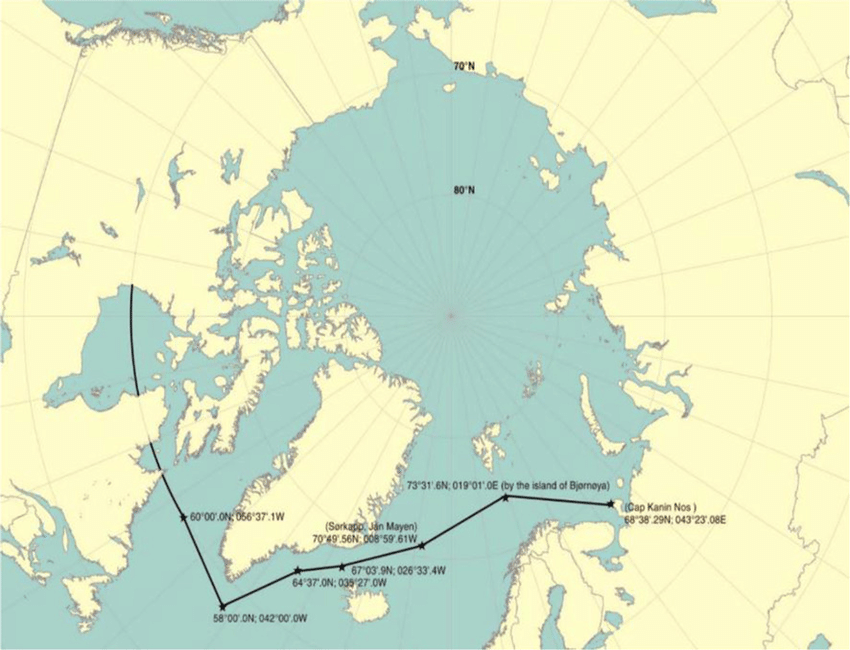
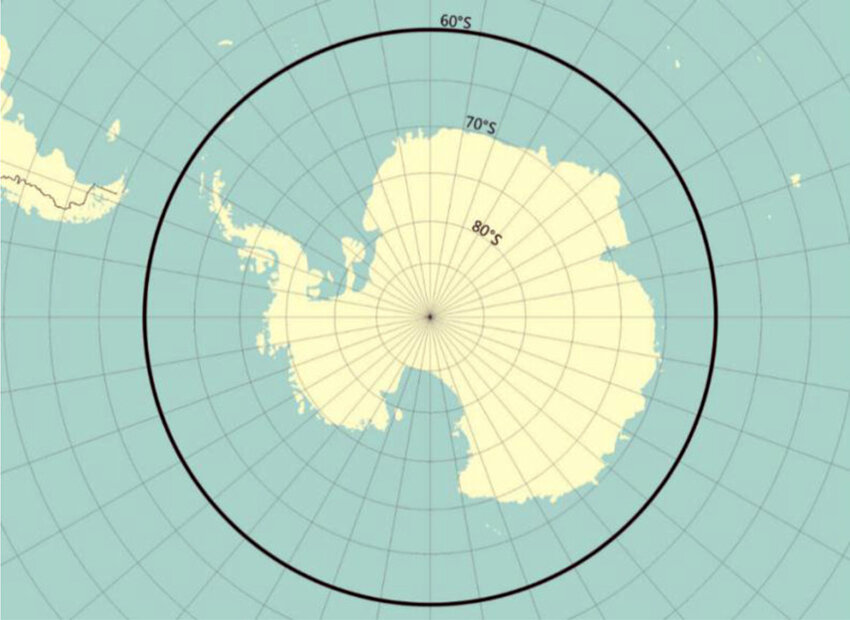
Part I (Safety measures) of the Polar Code applies to SOLAS certificated ships operating in the Polar waters.
Part II (Pollution prevention measures) of the Polar Code applies to ships operating in Polar waters in accordance with the application of each Annex:
-
Annex I – Prevention of pollution by oil:
All ships -
Annex II – Control of pollution by noxious substances in bulk:
All ships certified to carry noxious liquid substances in bulk -
Annex IV – Prevention of pollution by sewage from ships:
Ships of 400 gross tonnage and above; and ships certified to carry more than 15 persons -
Annex V – Prevention of pollution by garbage from ships:
All ships
2. INSPECTION OF A SHIP
2.1 Pre-Boarding Preparation
The PSCO should verify the current information regarding the trading area of the ship and whether the ship’s forthcoming voyage is to a polar area.
2.2 Initial Inspection
During an initial PSC inspection, the PSCO should verify if the ship holds a valid Polar Ship Certificate (POLAR), along with the associated Record of Equipment.
That the Master and Chief Mate have a certificate in advanced training for ships operating in polar waters, and officer’s in charge of a navigational watch hold a basic certificate.
If the ship is certified, the PSCO should also ensure that the ship has a corresponding Polar Water Operational Manual (PWOM) on board.
The PSCO should verify that the Polar Ship Certificate is valid, that the survey dates and endorsements are aligned with the relevant SOLAS certificates, in compliance with SOLAS Regulation I/14. Additionally, the PSCO must check that the certificate includes the required supplement, detailing the equipment mandated by the Polar Code.
The PWOM is designed to address all operational aspects detailed in Chapter 2 of Part I-A of the Polar Code. Where relevant information, procedures, or plans are already included in other ship documentation, the PWOM may simply reference these documents rather than replicate the material. For guidance on the PWOM’s structure, refer to Appendix 2 of the Polar Code, which provides a model table of contents.
In addition, the PSCO should check the following:
- That the supplement to the International Oil Pollution Prevention Certificate (IOPP Certificate) (Form A or B as applicable) includes confirmation that the ship is in compliance with Part II-A Chapter 1 of the Polar Code;
- Standard format for the Procedures and Arrangements Manual, to check there is reference to the more stringent discharge criteria for Arctic and/or Antarctic waters.
- Form of Garbage Record Book for operation in polar waters;
- Ships carrying noxious liquid substances in bulk should have remarks in the NLS certificate.
If no clear grounds are found during the initial inspection, there is no further need to consider the Polar Code.
2.3 Clear grounds
The PSCO may establish Clear Grounds during the initial PSC inspection as follows::
- Polar Ship Certificate is not valid, it has expired or limitations have been or are likely to be exceeded.
- The PWOM is missing.
- Required equipment is missing in the Record of Equipment attached to the Polar Ship Certificate.
- Information from third parties such as a report or a complaint concerning non-compliance related to the Polar Code.
- The ship has arrived from a polar area without a valid Polar Ship Certificate.
- The ship does not have a valid Polar Ship Certificate and the next planned voyage is to a polar area.
- The specific training requirements as per STCW convention and code chapter V not met.
2.4 More Detailed Inspection
Where clear grounds exist, a more detailed inspection should be conducted by the PSCO; looking in more depth at the different requirements in the Polar Code. Evidence may be gained by conducting further checks, and from examination of documentation / certificates.
If the ship has arrived from a polar area without a valid Polar Ship Certificate the Flag State should be notified and requested to follow-up.
The PSCO may verify that the PWOM contains procedures for any of the operations set out in chapter 2 either directly or by cross-reference to appropriate information, procedures or plans that exist elsewhere in a ship's documentation.
As there is no requirement that the PWOM should be prepared in a language understood by the PSCO, the PSCO should only verify the PWOM if presented in an understandable language and otherwise note down in the report if the PWOM is in a language not understood.
2.4.1 Training
Reference is made to Chapter 12 of the Polar Code, Manning and Training. The goal of this chapter is to ensure that ships operating in polar waters are appropriately manned by adequately qualified, trained and experienced personnel.
In order to meet the functional requirement while operating in polar waters, masters, chief mates and officers in charge of a navigational watch shall be qualified in accordance with chapter V of the STCW Convention and the STCW Code, as amended.
The Administration may allow the use of a person(s) other than the master, chief mate or officers of the navigational watch to satisfy the requirements for training. Conditions for this to be accepted is given in 12.3.2 of the Code.
Every crew member shall be made familiar with the procedures and equipment contained or referenced in the PWOM relevant to their assigned duties.
2.4.2 Safety of Navigation
Chapter 9 of Part I of the Code gives the requirements related to safety of navigation. Ships shall have the ability to receive up-to-date information including ice information for safe navigation.
The navigational equipment and systems shall be designed, constructed, and installed to retain their functionality under the expected environmental conditions in the area of operation.
Systems for providing reference headings and position fixing shall be suitable for the intended areas.
Ships shall have the ability to visually detect ice when operating in darkness.
Ships involved in operations with an icebreaker escort shall have suitable means to indicate when the ship is stopped, meaning that these ships shall be equipped with a manually initiated flashing red light visible from astern to indicate when the ship is stopped .
2.4.3 Design and Construction
The Polar Code specifies the requirements regarding, among others, ship categories, intact stability calculations taking into account ice accretion if ice accretion is likely to occur in the area and period of operation, machinery installation, materials and structure.
2.4.4 Euipment
The Polar Code specifies the requirements regarding different equipment that may be required to be on board. Specific requirements are given to the windows on deck, lifeboats, clothing, personal and group survival equipment, ice removal and fire safety according to the operational assessment.
2.4.5 Communication
The regulations are provided in Chapter 10 in the Polar Code, and the goal is to provide effective communication for ships and survival craft during normal operations and in emergency situations.
2.4.6 Voyage Planning
The regulations are provided in Chapter 11 in the Polar Code, and the goal is to ensure that the Company, master and crew are provided with sufficient information to enable operations to be conducted with due consideration to safety and persons on board and, as appropriate, environmental protection. The voyage plan shall take into account the potential hazards of the intended voyage.
2.4.7 Pollution Prevention
Part II-A (Pollution Prevention Measures) has restrictions for discharge of pollutants while the ship is in polar waters. For a ship that has been on a voyage in polar waters, the record books could be reviewed to determine whether the discharge restrictions have been noted and complied with.
The PSCO should consult the Polar Code if further information related to the specific regulations are required.
2.5 Expanded Inspection
An expanded inspection should be carried out in accordance with the Paris MoU procedures and guidelines. There are no additional requirements regarding the Polar code to follow during an expanded inspection.
Back to Top3. FOLLOW-UP ACTION
3.1 Possible Deficiencies
Any Polar Code related deficiencies found by the PSCO should be recorded on the Report of Inspection issued by the PSCO using the following codes:
| Deficiency Code | Defective Item | Nature of Defect | Convention Reference | Delay Action Taken | Equip. (Y/N) | Det. (Y/N) |
|---|---|---|---|---|---|---|
| 01134 | Polar Ship Certificate | Missing, Invalid, Entries missing, Not properly filled, Expired, Withdrawn, Incomplete, Survey out of window | Polar Code Part I-A, Chapter 1, paragraph 1.3.1 | Rectified, At the next port, Within 14 days, Before departure, At an agreed repair port, As in the agreed class condition, As in the agreed flag State condition, Master instructed to ... | N | Y |
| 01335 | Polar Water Operational Manual | Missing | Polar Code Part I-A, Chapter 2, regulation 2.3.1 | Rectified, At the next port, Within 14 days, Before departure, At an agreed repair port, As in the agreed class condition, As in the agreed flag State condition, Master instructed to ... | N | Y |
| 11133 | Personal and group survival equipment | Missing, Incomplete, Not as required | Polar Code Part I-A, Chapter 8, Regulations 8.3 | Rectified, At the next port, Within 14 days, Before departure, At an agreed repair port, As in the agreed class condition, As in the agreed flag State condition, Master instructed to ... | Y | Y |
3.2 Deficiencies Warranting Detention
Examples of detainable deficiencies relating to the Polar Code:
- Missing or invalid Polar Code Certificate
- Missing PWOM
- Missing or defective equipment
- Training not appropriate and according to the Polar Code
The PSCO should use professional judgement to decide whether the deficiencies reported are detainable or not and whether an ISM related deficiency should also be reported.
In case of detention, the PSCO should refer to the applicable procedures under Section 3 of the Paris MOU text and the PSCC Instruction “Guidance on Action Taken including detention”.
Back to Top